Sunday, March 11, 2012

Making Hay on a Sunday in March

It isn't very often - no, wait, it is completely unique, having never happened before - that I write to each and every one of my LinkedIn contacts simultaneously. But as the proverb goes, "circumstances alter cases."

The "circumstance" that causes me to risk Web-wide ire at my misuse and abuse of Reid Hoffman's gallantly unspoiled business tool is the arrival of the 365th day of survival since being operated on for pancreatic cancer. One entire year! Never has a year taken so long, never have 365 days seemed more like 1,365. But a year it is, and given the givens it deserves to be marked in some way. This is my way.

Worry not, I am not going to hit you up for money. (Even though the Pancreatic Cancer Action Network could most certainly always use it.) I am not even going to hit you up for emotion.

Nope. Far worse than that, I am going to hit you up - briefly - for attention. Because, to be brutally blunt, it isn't at all clear what kind of timeline anyone lives on once pancreatic cancer rears its ugly head; and so my resolution today is to make hay while I can - or, as the Hindus apparently put it, to turn the mill while there is still sugarcane.

The chances are that you will know someone who has been diagnosed with cancer, perhaps even with pancreatic cancer. If so then, like my wife and children the day I was diagnosed in a hospital in faraway Sarajevo (pictured below), you probably headed straight to Google...and were startled by what you found.
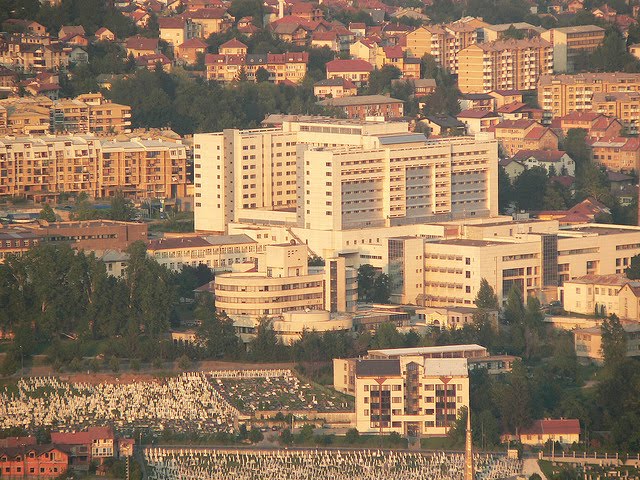
Koševo Hospital, the university hospital of Sarajevo in Bosnia

Few diseases, I suspect, return search results quite as gloomy as pancreatic cancer. A typical one is as follows:

Pancreatic cancer has a dismal survival rate...

or this

overall survival is dismal - 20 percent after one year and only 4 percent after five years

I mean, I am no statistician, and neither were any of my four kids, but these "survival rate" stats read, back then, less like a glimpse of hope and more like a death sentence.

But then when the heck did anyone ever rely on statistics, right? Besides, what matters is how early the tumor is found (earlier = smaller = better), whether it is deemed to be operable, and how well the surgery goes. There don't seem to be any stats for those lucky enough to have undergone a Whipple operation - the life-saving, if radical, surgical procedure that, 365 days ago today, was how I spent my morning.

I have already written briefly about the experience of being both diagnosed with the deadliest of all the cancers and spared/saved from it all within the space of three weeks. I had a stab, too, at trying to sum up what it is like, after the Whipple, to be prescribed follow-up chemotherapy for seven long months. None of these posts was very well written, but the intent was just to share an experience, in case might help provide some kind of insight either to those who had worse luck than mine, perhaps even to those who fared better in similar circumstances...and most especially to the rest of you who have been lucky enough not to one day, just three months after completing your third New York Marathon, be told completely out of the blue that you've got the deadliest of all the cancers. Remember to say a brief 'thank you' tonight in your prayers!

Here's how it went down 365 days ago in Copenhagen University Hospital (Rigshospitalet), which is where I had the Whipple procedure - in which, as one fellow pancreatic survivor recently put it, "Everything around the pancreas that can be removed, cut, whacked, chopped, is."

Rigshospitalet, the university hospital of Copenhagen in Denmark

Reassured by the fact that around thirty of these operations are performed each year by this same team of surgeons, I remember one year ago today smiling first at my wife, who was right there beside me as they prepped me for the op, then at the anesthetist whose job it was to put me under...and saying a private little prayer in my head, before oblivion took over.

There's something curiously daunting about going to sleep in full possession of your innards, but with the certain prospect of waking up with your inventory of bodily organs severely depleted.

The lion's share of my pancreas, all of my gall bladder, a goodly portion of my stomach, and an assortment of small-intestine-removal later...I did indeed wake up. And what a relief it was to find that 1. I was alive and kicking and 2. that I was in no kind of pain - just "downsized" internally. In fact I was now significantly less complicated under the hood!

Departments of Surgical Gastroenterology are probably not famous for being fun places to hang out, but if you have to for one reason or another - including this Whipple operation, which is one of the most complicated they do - I can certainly recommend the incredible team at Copenhagen's Rigshospital.

Recovery from a Whipple is an especially brutal process because the basic trick is to do it just as fast as humanly possible, getting back onto one's feet almost immediately, even if only to stand up. Other tricks include repeatedly saturating one's system with oxygen via special breathing exercises that have been shown to speed up the post-operative healing process...even though the last thing you instinctively want to do, when your midriff has been more or less sliced into two, is to breathe deeply. (Trust me on this!)

365 Days Ago Today - "Smile, you're on Blogger.com!"

Whipple patients typically lose 10% of their body weight in the pre- and post-operative period. It has taken an entire year to put even half of that back on! You might think that it every teenage schoolgirl's dream, but I am no teenage schoolgirl and I can tell you, nothing is stranger than finding that none of the things you ate before are going to help you put weight back on...and that instead you have to become a fat-chaser, a scavenger on the lookout for calories wherever you can find them.

I failed miserably, for at least the first three months. Putting butter on my bread, ignoring most vegetables as having insufficient protein for the amount of room they took up in my tummy, these sorts of changes seem simple - but they are not! I adore, sorry past tense, I adored, salads. But lettuce leaves and spinach leaves and suchlike are a thing of the past, once the part of the pancreas that produces enzymes is tossed into the surgical waste-bin. Because there's nothing to help digest them...which means basically that they get stuck, and it is excruciatingly painful as well as deeply frustrating.

The pancreas is of course where your insulin is manufactured too. The after-effects of Whipple surgery differ according to how much or how little of the pancreas is left by the surgeons, but in my case all I can say is, though incredibly lucky to be left with at least a bit of it, the process of eating say an orange or a banana seems to have been undermined forever. (Guess what my two absolute favorite fruits were? I guess one should never take ANYTHING for granted. I wonder how many bananas and oranges I scoffed over the years without ever really giving it a thought; whereas now, those two tastes are almost foreign to me, I can hardly remember either of them.)

Worries over dietary changes and internal rearrangements were pushed firmly onto the back burner the day, on the very point of leaving hospital and being declared a resounding success from a surgical point of view, I was told that seven months of chemotherapy was going to be needed too. Belt and suspenders. Pancreatic cancer is like the worst kind of serial killer, and no one was intending for me to take any chances.

So I had survived the disease. Now all I needed was to survive the cure!

As I say, I already wrote about what it's like, after the Whipple, to be prescribed follow-up chemotherapy for seven long months. That was at the mid-way point. Since my 189 days of chemo ended, my overall health seems from the outside enviable - and probably is, at least to almost everyone but me, who feels it has been disappointingly slow, unexpectedly erratic, and very little different from during chemo itself. Energy levels remain fluctuating rather than steady, sleep patterns likewise, and concentration is a word that seems almost to have tumbled out of my dictionary for good.

The ugly question naturally reared itself: if the Whipple surgery went so well (and it did, the surgeons were 100% adamant about that), why wasn't I by now back to Marathon form, both professionally and personally? And the answer will come shortly...courtesy of the bloodwork and the scanning techniques that Rigshospital once again is bringing to bear on this onetime athlete's body of mine. Cross your fingers; certainly I am crossing mine on this anniversary of anniversaries. One thing is sure: it isn't for want of trying - I have been trying once more to use running as my health barometer, and really have tried again and again and again to get back my running Mojo - just as, professionally, I have sought to regain my Cloud Mojo.

But it appears that convalescence is not only a question of mind over matter. Sometimes one needs "a little help from one's friends" - including, in this case, from Copenhagen University Hospital's brilliant oncologists - who understand the nuances of X-ray computed tomography!

Once they've advised me how best to proceed from here, I shall let you know (more succinctly next time, I promise!) how the future trajectory is looking. Hopefully the current little setback will be put into context and the overall prognosis will turn out to be simply Cloudtastic ;-)

Thursday, October 6, 2011

RIP Steve Jobs 1955-2011

With his passing just six weeks after stepping away from his role as CEO of Apple, Steve Jobs has made Wednesday, October 5th, 2011, one of those days that many of us will remember for the rest of our lives - a day when someone whose shining brilliance and persistence brought him victory after victory throughout the past four decades. The only thing that beat him, and even that took seven years, was pancreatic cancer.

In the interests of full disclosure, I should say right away that the same major surgical procedure Jobs had in July 2004, called a pancreaticoduodenectomy (or "Whipple procedure"), is one I myself underwent in March of this year, and for the exact same reasons. The full (and somewhat grisly) details of the procedure are perhaps best left to Wikipedia, but one thing I can vouch for is that it requires, shall we say, one's full attention.

The idea, for those of us - like Jobs and myself - "lucky" enough to have a tumor on the head of the pancreas rather than elsewhere, is to remove not just most of the pancreas but also a welter of other internal organs that alas represent the collateral damage of this particular operation. I may put quotes around lucky but in truth it really was a stroke of luck, for both him and me. Because the prognosis for pancreatic cancer anywhere else in the pancreas is not exactly uplifting.

The Jobs operation in July 2004 went well, as did mine in 2011...a tribute to the prescience of the U.S. surgeon Allen Whipple who first devised the procedure as long ago as 1935, making it one of surgery's longstanding success stories. Resecting a malignant tumor is a serious business, Whipple's original methodology has understandably been refined and improved, but those surgeons who perform this procedure - which can take anything up to eight hours - are to my mind surely some of the bravest and finest in the front-line of oncology.

Allen Whipple died in 1963 when Jobs was just eight. But it would have been interesting had the two of them met, because both were pioneers in the truest sense: they were both individuals whose gift was to be the first to enter a new region, thus opening it for eventual occupation and development by others.

The regions of technology that Jobs and his companies (plural) entered first are known to us all. His legacy is all around us. The international Cloud Expo team, in particular, will be thinking of him in just one week's time, when Apple's iCloud service is due to launch.

RIP Steve Jobs.

Wednesday, August 31, 2011

Live By the Web, Die by the Web

I just this morning received the following enthusiastic message from Klout:


Summer of Klout

Way to go! Your Klout Score braved the dog days of summer and still came out on top! Maybe it's time for a vacation?


This made me chuckle, because if one thing is true about my Summer it is that I didn't brave the dog days, not at all. Instead I vanished into the haze that those few lucky enough to be cured of pancreatic cancer can vanish into. Part physical, part psychological, it's a kind of Never-Never Land - or, more accurately maybe, a Sargasso Sea, a zone characterized by the calm winds of the horse latitudes.


So, no matter what Klout may say to the contrary, this was for me a summer of seaweed rather than sagacity...and I apologize to those who were expecting me to show greater resilience to my chemotherapy. No one has been more surprised than me. I am certainly not out, but it would be wrong of me to pretend that I'm not down. I'll come back fast, I always do; but it may not be till the final doses of Gemcitabine have been injected into me in the epic half-hour infusions that come twice every three weeks to crush my white cell production and, along with it, that of any would-be neoplasms.


"Better safe than sorry," that's all one can say. Along with, "Roll on, 9th Cloud Expo!" - because by then, I will be free and clear of chemistry and cytotoxins will no longer be mixed in with my bloodstream.


I - quite literally - cannot wait.

Monday, July 11, 2011

How Four Months Can Very Soon Feel Like Four Years

Strange just how much can happen in one-third of a year.

Four months ago to the day, I was wheeled into an operating theater in Denmark's top hospital. In the intense few hours that followed, a gifted surgeon and a deeply professional team obtained a dream result: they successfully resected a malignant tumor from my pancreas and then took an incredible number of biopsies from surrounding tissue, just to be on the safe side. Each and every one subsequently came up negative, so the cancer hadn't spread.

I wrote briefly about the experience of being both diagnosed with the deadliest of all the cancers and spared/saved from it all within the space of three weeks. Many people have asked me: how have things been going since?

The answer is not simple, for one reason: chemotherapy.

As part of its world-beating approach to combating deadly cancers, Denmark's University Hospital recommends and requires that a "cured" patient nonetheless undergo follow-up chemotherapy...for six months.

Three of those months - nearly - have now elapsed, though I have to admit that no month when you are undergoing chemo "elapses" (if only). Having one's post-operative existence divided up into 21-day cycles, each one marked by rising levels of heavy metals in one's body, well it's no walk in the park, alas. And the side-effects of the chemicals used [PDF] - I can testify - are in some ways as insidious as the original cancer, in that they are gradual, but comprehensive.

In my case, and remember each and every cancer patient reacts difficulty, I managed the first three cycles, 63 days, with only a few setbacks. But the fourth cycle somehow knocked me sideways, which is why you have heard so very little from @jg21 on Twitter, and seen so very little of me on Facebook since June's wonderful 8th Cloud Expo in NYC.

The past three weeks, in fact, have brought me face-to-face with some very harsh realities. The final three months of chemo are going to be a challenge...and, in order to successfully meet that challenge, I am going to have to dramatically rearrange my professional priorities so as to maximize healing time, minimize stress, and optimize my working day.

For all indirectly affected by this epiphany, which would probably have been better had it come a tad sooner, I apologize. But never has "less is more" been truer. For me to be back to fighting fitness - and weight! - for the Fall, I need finally to accept that convalescence (from Latin convalescere, whose root is in valescere, to be strong...which I currently am not) isn't something that you just "fit in" around all your other commitments; it is something you have to prioritize ahead of those commitments.

My aim in July, August and September then is to write, but to do so largely offline. You will still see the results online, but only as and when they are uploaded. Look out soon, for example, for my updated and hugely expanded Top 350 Players in the Cloud Computing Ecosystem, for an entirely new feature, Around the Cloud in Eighty URLs, and assorted other features aimed at providing convenient one-stop destinations for Cloud insights and information.

I need a 3-month respite from Twitter. By the final three months of 2011 I shall be completely done with chemotherapy, will no longer be tasting heavy metal at the back of my throat 24x7, will no longer be falling asleep for 12 hours at a time, and will no longer see every muscle group in my entire body subject to the ravages that only chemo can exact...a fierceness that has no respect for former waist or neck sizes.

I repeat to myself twenty times a day that it is better than the alternative. And it is. But it would be wrong of me to pretend that this hasn't been the longest four months of my life, and that I am steeling myself for a rough final three months still ahead.

When all is said and done, it seems a ridiculously small price to pay for surviving pancreatic cancer. I am very very grateful.

It brings to mind the words of the writer Melodie Beattie, who memorably noted:
Gratitude unlocks the fullness of life. It turns what we have into enough, and more. It turns denial into acceptance, chaos into order, confusion into clarity.... It turns problems into gifts, failures into success, [and] the unexpected into perfect timing."

Sunday, May 22, 2011

The "Summer of Cloud Computing" Begins...

On June 6-9, when the doors to Cloud Expo New York open at the Jacob Javits Center, IT infrastructure and operations professionals from around the world will be able to see with their own eyes that the "Summer of Cloud Computing" has well and truly begun.

With company participation from every level of the cloud computing ecosystem and a non-stop, 4-day technical program, Cloud Expo New York features expert speakers from every top Cloud player, including Abiquo, Amazon, Amplidata, AppZero, Aprimo, AT&T, Backupify, CA Technologies, Capgemini, Cbeyond, CiRBA, Cisco, City of Portland, CloudCamp.org, Cloud.com, Cloud9, CloudSwitch, CodeFutures, Dell, Dell Boomi, Desktone, Eucalyptus Systems, FastIgnite, Fiorano, Full360, Fusion-io, Global Digital Forensics, GoGrid, Google, HP, HyTrust, IBM, iGATE Patni, Impetus, Interactive Intelligence, Interxion, KPMG, KuppingerCole, Layered Technologies, Layer7, LogLogic, McAfee, Microsoft, MIT, Monster.com, Mycroft, National Reconnaissance Office, NetDialog, The New York Times, NJVC, NYSERDA, OpSource, Oracle, OutSystems, OxygenCloud, Parabon, PayPal, PerspecSys, Ping Identity, Pitney Bowes, PricewaterhouseCoopers, Quest Software, Racemi, Rackspace, Red Hat, RightScale, Rise Partners, Riverbed Technology, Robust Cloud, Roundarch, Servoy, SnapAppointments, Spoon, Stoneware, Sybase, Telx, 1010data, Terremark, Trend Micro, UShareSoft, Virtela, VMware, Voxel, WidePoint, Xiotech, Yahoo!, Zapthink, Zetta and Zeus Technology.

On the Expo Floor, with over 100 booths, leading technology solutions providers will be showcasing a welter of technologies aimed at making cloud computing reliable, stable and manageable for customers large and small.

The quality of the speakers is best evidenced by the fact that they include:

  • Co-Founder and CTO of Dell Boomi - Rick Nucci
  • President of Dell Services - Steve Schuckenbrock
  • CEO of Abiquo - Pete Malcolm
  • CEO & Co-Founder at RightScale - Michael Crandell
  • Sr. VP of the Application Platform Division at VMware - Rod Johnson
  • CTO of Rackspace - John Engates
  • CEO of Backupify - Rob May
  • CEO & Founder of GoGrid - John Keagy
  • CTO of Worldwide Services at Microsoft - Norm Judah
  • Group VP of Software Cloud Strategy for Oracle Fusion Applications - Chris Leone
  • VP of Global Cloud Computing at Yahoo! - Todd Papaioannou
  • Technology Evangelist at Amazon - Jinesh Varia
  • Developer Advocate at Google - Chris Schalk
  • Sr. Software Engineer at IBM - Doug Tidwell
  • Director, Cloud Global Practice at HP Enterprise Business - Marc Wilkinson
  • CIO of the National Reconnaissance Office - Jill T. Singer
  • CTO at PayPal - Scott Guilfoyle
  • CTO & Co-Founder of Eucalyptus Systems - Rich Wolski
  • Sr. Director of Cloud Platforms at Red Hat - Tobias Kunze
  • Co-Founder & CEO at OpSource - Treb Ryan
  • VP, Cloud Services at Terremark - Bill Lowry
  • CEO of FastIgnite - Simeon Simeonov
  • CTO & Co-founder of UShareSoft - James Weir
  • Advisor Lean IT & Cloud Computing at CA Technologies - Gregor Petri
  • Distinguished System Engineer at Cisco - Jim French
  • Sr. Mgr. of SaaS Products & Cloud Solutions at HP - Neil Ashizawa
  • CTO McAfee Content & Cloud at McAfee - Scott Chasi
  • Business Development Director at Oracle - Arturo Pereyra
  • Co-Founder of CloudCamp - Dave Nielsen
  • Director at KPMG - Bhargav Shah
  • Sr. VP of CRM at Oracle - Anthony Lye
  • CTO & Chief Architect at Layer 7 Technologies - K. Scott Morrison
  • Partner Engineering Consultant at Spoon - Lee Murphy
  • CTO of Sybase - Irfan Khan
  • CTO of Vordel - Mark O'Neill
  • CEO of AppZero - Greg O'Connor
  • Founder & CEO of Oxygen Cloud - Peter Chang
  • VP of Cloud Architecture & Services at Virtela - Ron Haigh
  • Co-Founder & CEO of Fusion-io - David Flynn
  • Co-Founder of The Rackspace Cloud - Rackspace
  • President at Layered Technologies - Brad Hokamp
  • SVP of Facilities Engineering at Terremark - Ben Stewart
  • Founder/CTO of PerspecSys - Terry Woloszyn
  • CISO for the City of Portland - Logan Kleier
  • Co-Founder & CTO of Ajax.org - Rik Arends
  • Engineering Fellow with NJVC - Kevin Jackson
  • Founder & CEO, Parabon Computation - Steve Armentrout
  • Managing Partner at ZapThink - Jason Bloomberg
  • Sr. Sales Engineer at Eucalyptus Systems - Paul Weiss
  • CEO of Servoy - Jan Aleman
  • VP of Product Marketing at Oracle - Rex Wang
  • Global Director for Global Application Outsourcing at Capgemini - Mark Skilton
  • CTO at Ping Identity - Patrick Harding
  • Corporate Business Development at Zeus Technology - Raja Srinivasan
  • Technical Leader in the Office of the CTO at Riverbed Technology - Steve Riley
  • Product Development Lead at Rackspace - Josh Odom
  • Co-Founder, CEO & CTO at Stoneware - Rick German
  • VP of Community at Cloud.com - Mark Hinkle
  • Software Manager at The New York Times - Paul Robbins
  • Chief Solution Architect at Desktone - Danny Allan
  • Director of Advanced Technology & Products for Quest Software - Thomas Bryant
  • Director at PricewaterhouseCoopers - Brian Butte
  • Java EE and GlassFish Evangelist at Oracle - Arun Gupta
  • President & Co-Founder of HyTrust - Eric Chiu
  • CTO & SVP, Operations at OpSource - John Rowell
  • Co-Founder of KuppingerCole - Tim Cole
  • Product Manager in the Cloud Division at Rackspace Hosting - Megan Wohlford
  • Communications Director at Interxion - Jelle Frank
  • Co-Founder of 1Plug Corporation - Penelope Everall Gordon
  • Founder at SnapAppointments - Cody Harris
  • Co-Founder of CiRBA - Andrew Hillier
  • Co-Founder of SnapAppointments - Brock Holzer
  • Director of Integration Solutions for Aprimo - Amelia Ross
  • Executive VP at LogLogic - Bill Roth
  • VP Engineering at NetDialog - Tim Rühl
  • Developer, Web Services JBoss/Red Hat - Anil Saldhana
  • Vice President, Products at Zetta - Chris Schin
  • CIO, Enterprise Business Partners - Pradip Sitaram
  • Sr. Director of Engineering and R&D at Impetus Technologies - Vineet Tyagi
  • 2011 Instructor at Cloud Computing Bootcamp - Larry Carvalho
  • Business Development Manager at Ajax.org - Lieke Arends

Thursday, May 5, 2011

Social Comparison Engine Meets Cloud Computing & PaaS

One can add the word "social" to any other word in the English language right now, and somewhere, sometime, a group of software developers will turn the colloquy into some kind of a website or application.

Take "social" + "comparison" for example.

In 2006, whileon maternity leave, French-born Vanina Berger (pictured) - a senior software engineer - wanted to compare unusual things such as the best place to give birth. Realizing that it was not so easy to find comparison tables about things that were not products to sell, she began wondering if perhaps what was needed was a comparison engine, a tool that allowed one to collaborate with others to maintain a matrix with a lot of interesting details, advanced criteria such as ratings, etc. In short it would be very nice to have a generic, collaborative and social tool that helps everyone to create easily comparisons...about ANYTHING.

Vanina's partner Alexis Fruhinsholz found the idea interesting and started to work on the project at the end of 2008. The result was SocialCompare.com, a site I'd not heard of until the team behind it reached out to me yesterday to ask if I'd like to use it to conduct a comparative survey of PaaS/Cloud services.

The results are below. Let me know what you think about SocialCompare.com as an application. I am certainly intrigued.

Sunday, May 1, 2011

It Is Time To Help the Web Be All It Can


May 1st seemed the perfect day to just take a few moments to pause and take stock. This is going to be the only year of my life (I hope!!) involving an escape from death, and in those circumstances it is difficult to prevent oneself from wondering how best to use the gift that has been handed to me: nothing less than the remainder of my life.

So let me report on the results...

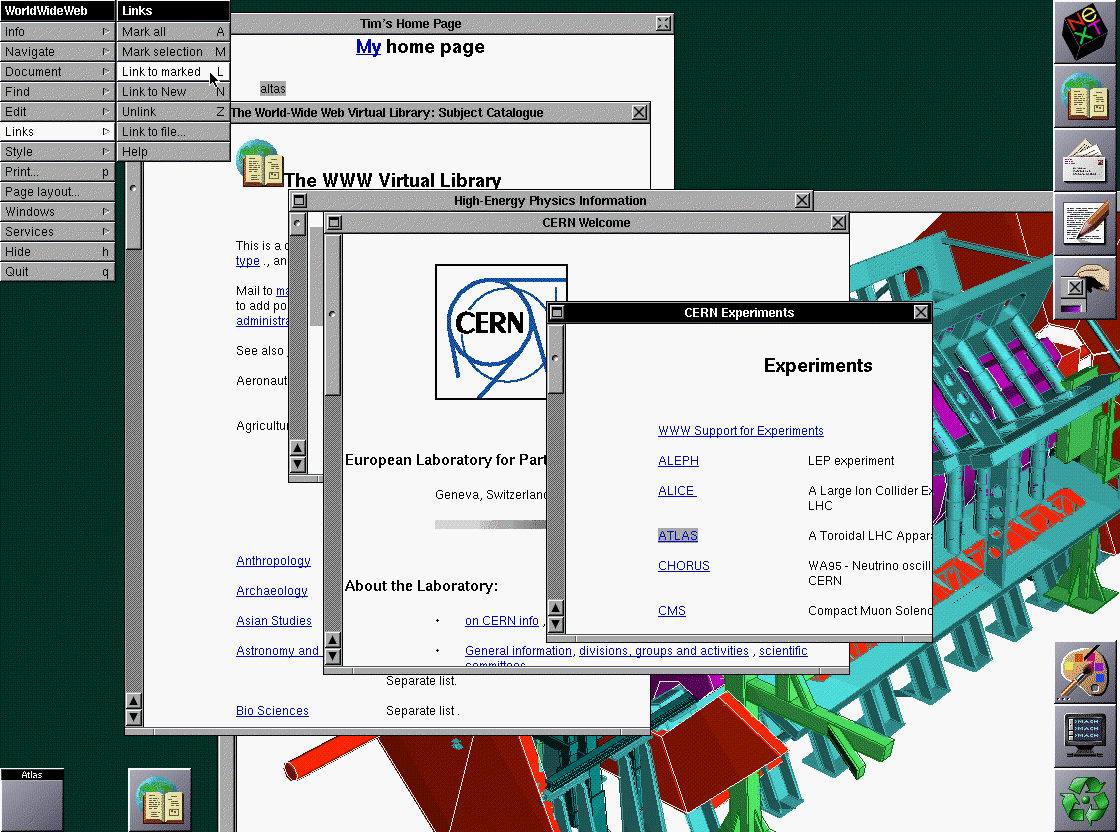
First, a brief historical preamble. Eighteen years ago - on April 30, 1993 - CERN released the source code of the world's first Web browser and editor into the public domain. It was called WorldWideWeb, all joined together just like that, and Sir Tim Berners-Lee has some screen shots of it at his CERN page.

It would be very difficult to argue anything other than that, in the eighteen subsequent years, the technological trajectory that CERN's browser heralded has resulted in tumultuous changes in business, education, government, entertainment, and society. Did it cause them? Maybe not. Did it accelerate them? Hell, yes!!

"CERN's intention in this is to further compatibility, common practices and standards in networking and computer supported collaboration," wrote CERN in its accompanying note to the release of the code (pictured above). It was a phrase that resonated with me then, and it is one that resonates with me still today. "Computer supported collaboration" - on which I published a pioneering book in 1994 edited by the late Peter Lloyd - is, in my view, the philosopher's stone of the World Wide Web. Like that imaginary substance that people in the past believed could change any other metal into gold, "eCollaboration" has been touted throughout every one of those eighteen years as the real payoff from the Web....if only companies, organizations, governments and indeed society at large could figure out how to harness it.

Email is the world's most widespread form of computer supported collaboration. Facebook is another, far more recent one - as is YouTube and eBay and Skype and of course Twitter. Yet it is my view, and has been for many years, that none of these technologies or applications or sites unleashes the true potential of co-intelligence - the shared or group intelligence that emerges from the collaboration (and competition) of many individuals.

So how can we get from TBL's browser to a truly co-intelligent world?

That, as I reflected on May Day in my book-lined, technology-rich work studio, is the crucial and most significant question of our time. It is also a question to the exploration and answering of which I am intending to devote a significant proportion of my efforts, moving forward.

"There is a quantitative element to human affairs," as H.G. Wells once famously wrote. "Doing something does not amount to very much if we do not do enough." [my emphasis]